

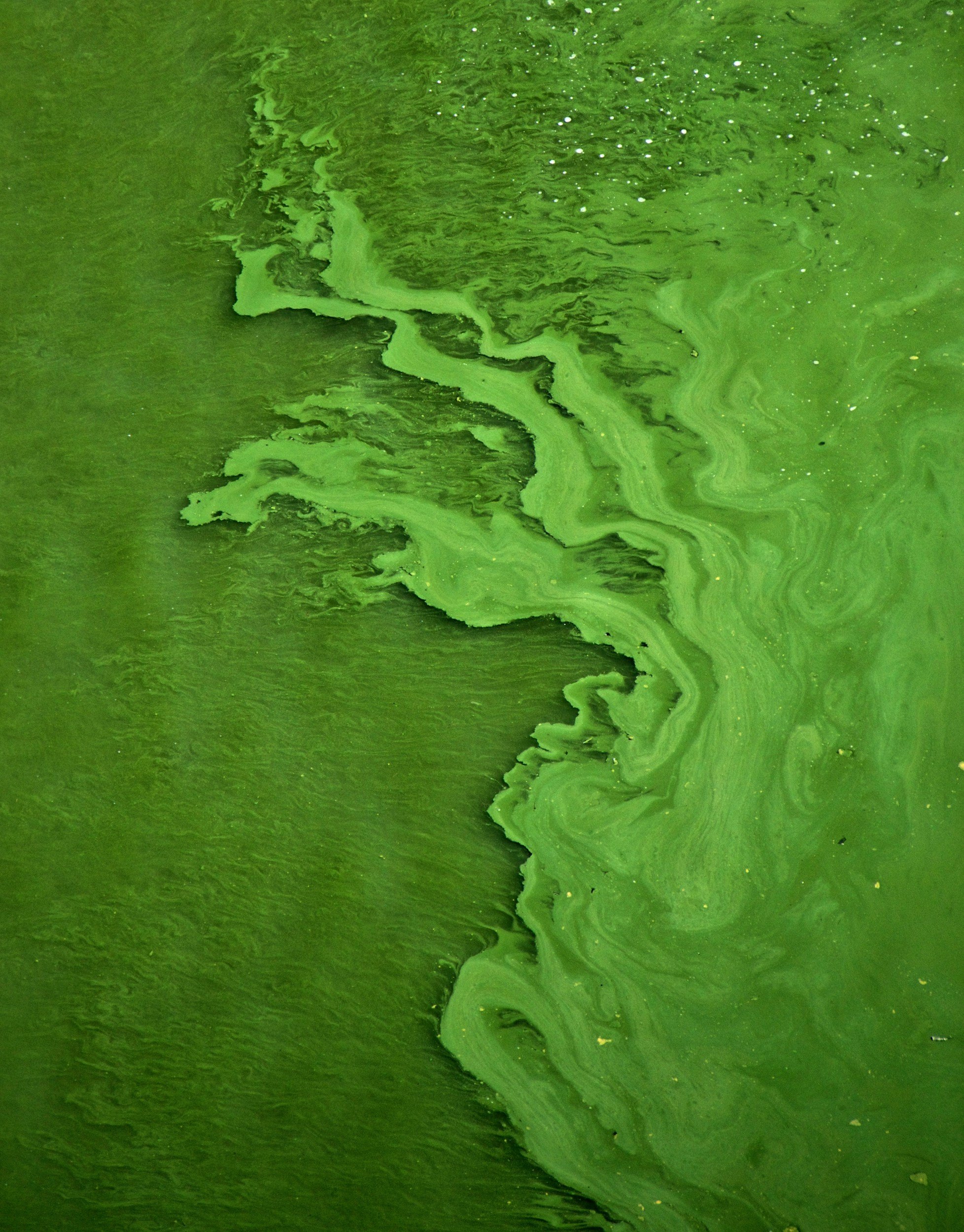
What is Blue-green algae?
While blue-green algae may look like a plant is it actually a kind of bacteria!
Cyanobacteria, commonly known as blue-green algae, is a photosynthetic bacterium that has been naturally occurring in ecosystems across the globe for over 2 billion years (Chorus, 2021). While there are historical records of cyanobacterial toxins in lake sediments dating back to the late nineteenth century, they have been in much lower concentrations than those in today’s lakes (Chorus, 2021). There are about 2000 cyanobacterial species. They are commonly found in three different forms: unicellular, colonial and filamentous.
Cyanobacteria produce cyanotoxins, such as microcystins, that can lead to acute and chronic toxicities in humans and animals (Vu et al., 2020). Approximately 25-75% of cyanobacteria are toxic, and residential water treatments cannot remove these toxins from drinking water (Dao, 2016).
Scroll down to see the different forms under a microscope!
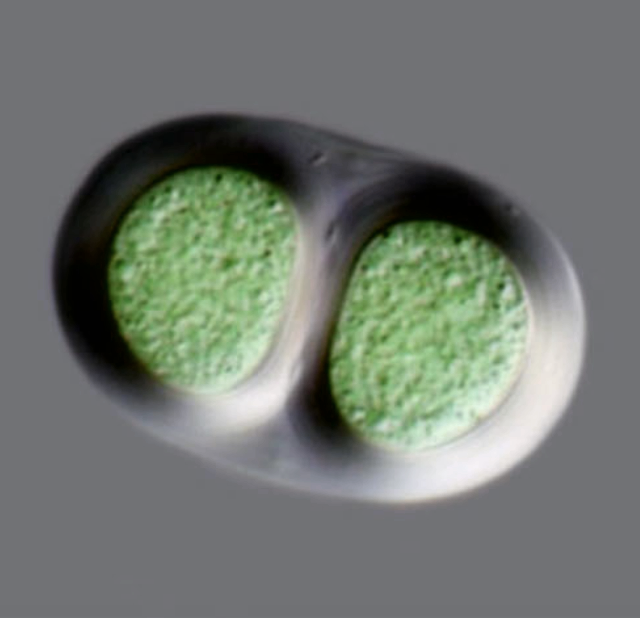
Unicellular
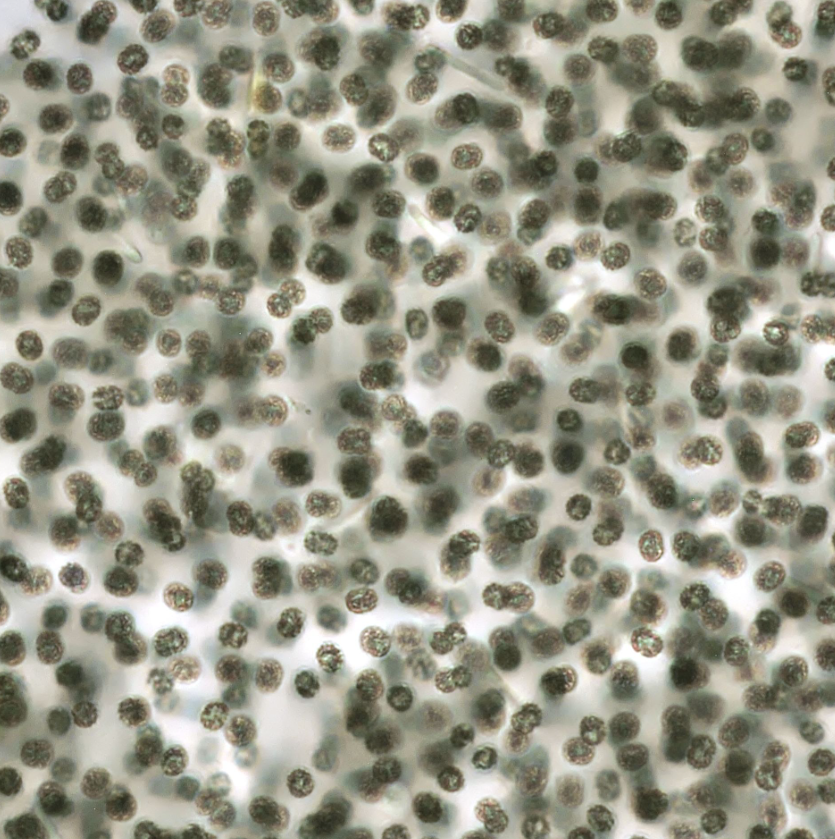
Colonial
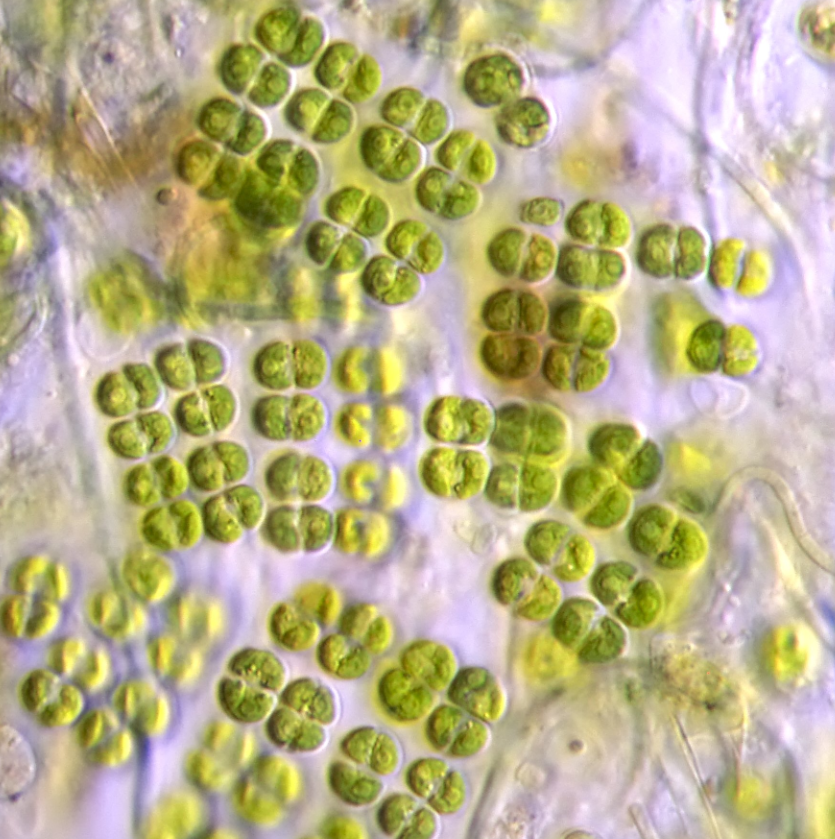
Colonial
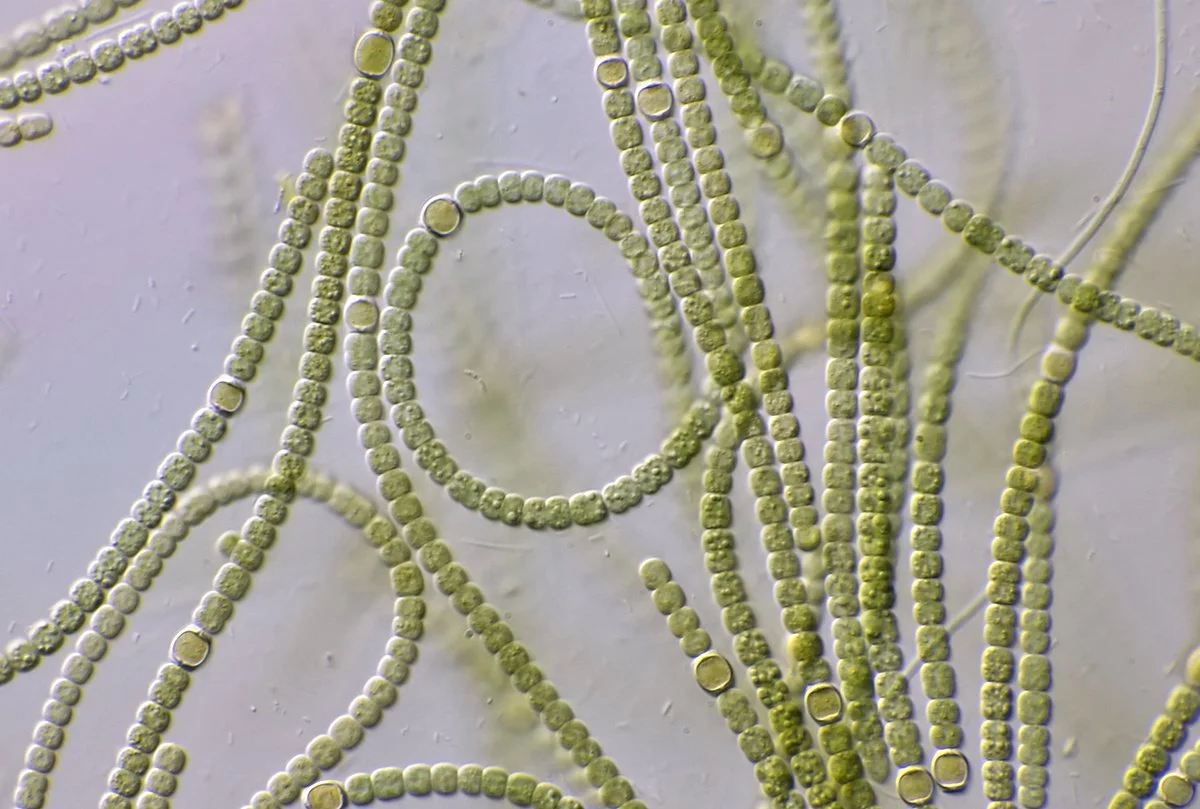
Filamentous
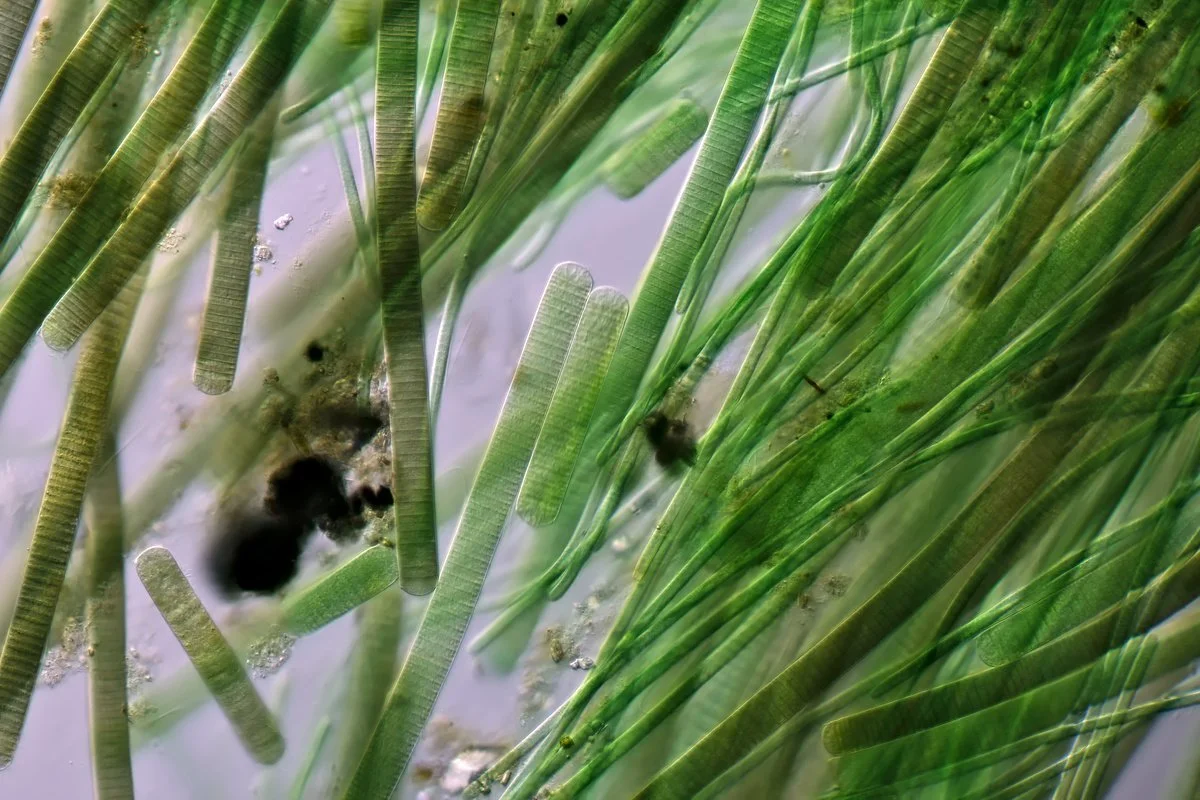
Filamentous
Images sourced from: https://microscopyofnature.com/cyanobacteria
(Vu et al., 2020)