What impacts do blue-green algae blooms have on their environment?
Blue‑green algae blooms can significantly change the appearance and quality of a water body. They often turn clear water green or murky and create thick surface scums along shorelines, reducing both recreational use and the overall aesthetic value of lakes and rivers. Many blooms also release strong earthy or musty tastes and odours caused by naturally produced compounds. Beyond their appearance and smell, cyanobacterial blooms create major chemical and ecological changes that can disrupt entire freshwater ecosystems.
Light, temperature and water stability all play key roles in bloom formation. Cyanobacteria can thrive in low‑light and turbid waters because their pigments allow them to use a wide range of the light spectrum. They grow best in warm temperatures (25–30°C), which is why blooms peak in summer. Calm conditions, thermal stratification and stable water columns give cyanobacteria a competitive advantage, allowing surface blooms to form and persist.
pH fluctuations are common during a bloom. Cyanobacteria raise pH during the day through photosynthesis, then pH drops when cells die and break down. Many aquatic species can only tolerate a narrow pH range, and frequent swings can damage gills, reduce growth, interfere with reproduction and, in severe cases, cause mortality. Shifting pH also affects how nutrients and metals behave in water, sometimes making harmful substances more bioavailable.
Dissolved oxygen (DO) depletion is another major impact. Cyanobacteria consume oxygen at night, and large amounts of oxygen are needed to decompose dead algae. This increases biochemical oxygen demand (BOD) and can lead to hypoxia (low oxygen). Low DO can stress or kill fish, invertebrates and other organisms that rely on oxygen‑rich water, and it can create “dead zones” where few species can survive.
Biotic (living things) interactions further reinforce bloom dominance. Cyanobacteria are often poor food sources for zooplankton and can resist grazing. Some species produce toxins or chemicals that suppress competing phytoplankton, altering species composition and weakening food webs. Their buoyancy regulation also allows populations to stay suspended in the water column, increasing their persistence.
Water‑body characteristics influence how long blooms last. Shallow lakes with long water‑retention times and low mixing often support persistent blooms, while deeper lakes with strong flushing may experience only short‑lived events.
Together, these factors make the environment less hospitable for many native species, reduce biodiversity and give cyanobacteria a strong competitive advantage. Over time, repeated blooms can reshape the entire structure of a lake or river, altering habitats and decreasing overall ecosystem health.
(Hamilton et al., 2016; Vu et al., 2020; Sharma et al., 2011)
Impacts:
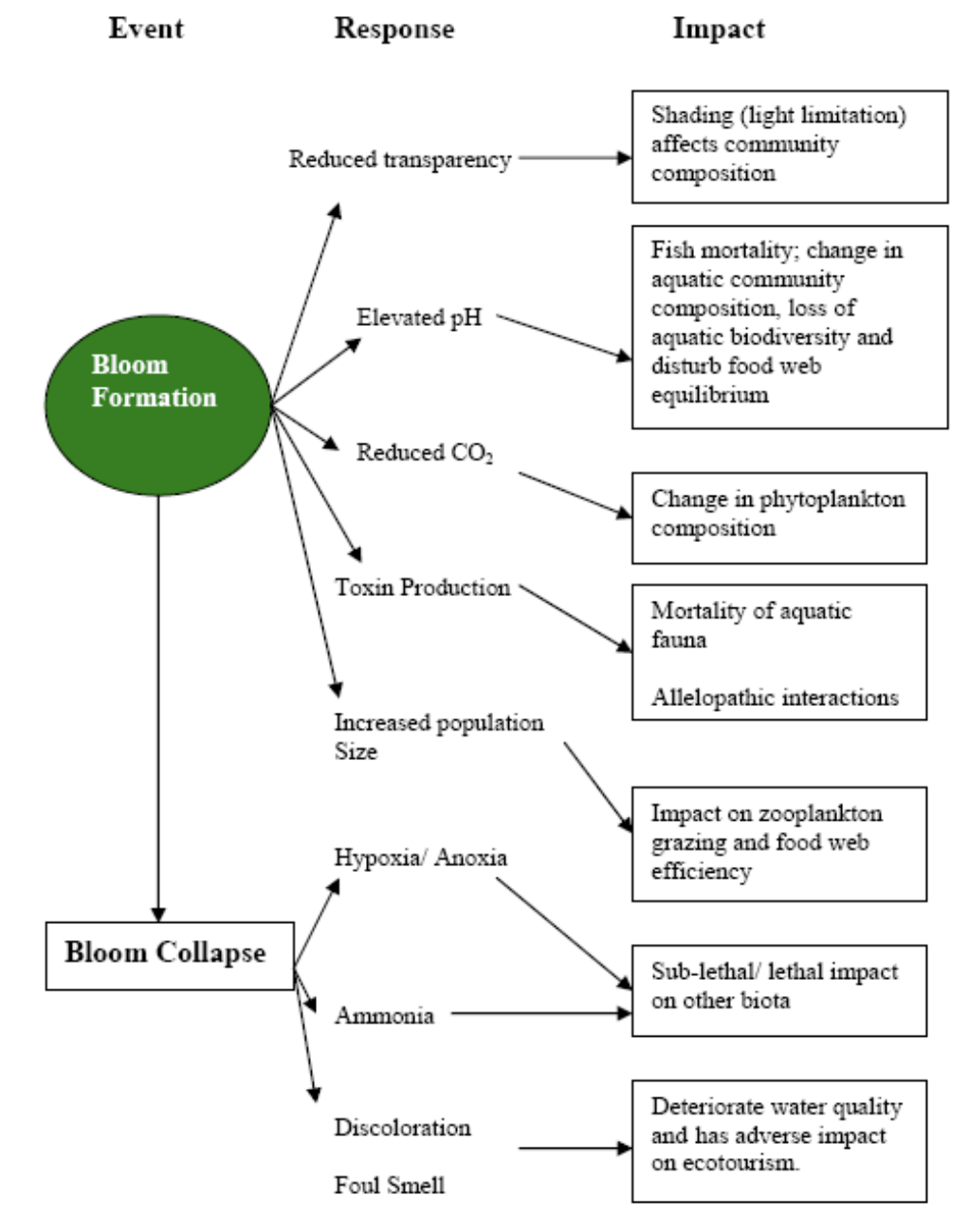
Blue‑green algae blooms trigger a series of changes in the water that impact the entire ecosystem.
During bloom formation:
• Reduced water transparency limits sunlight, which alters which species can survive.
• Elevated pH can lead to fish deaths, loss of biodiversity and disruption of food webs.
• Reduced carbon dioxide changes which phytoplankton species dominate.
• Toxin production can kill aquatic animals and affect interactions between species.
• Large population increases reduce zooplankton grazing and weaken food‑web efficiency.
When the bloom collapses:
• Hypoxia (low oxygen) develops as algae die and decompose, threatening many aquatic species.
• Ammonia release can have harmful or lethal effects on other organisms.
• Discoloration and foul smells reduce water quality and negatively impact recreation and ecotourism.
(Sharma et al., 2011)
(Sharma et al., 2011)